Disclaimer: I mostly write about my life but sometimes I write about things that piss me off. This falls within the latter category.
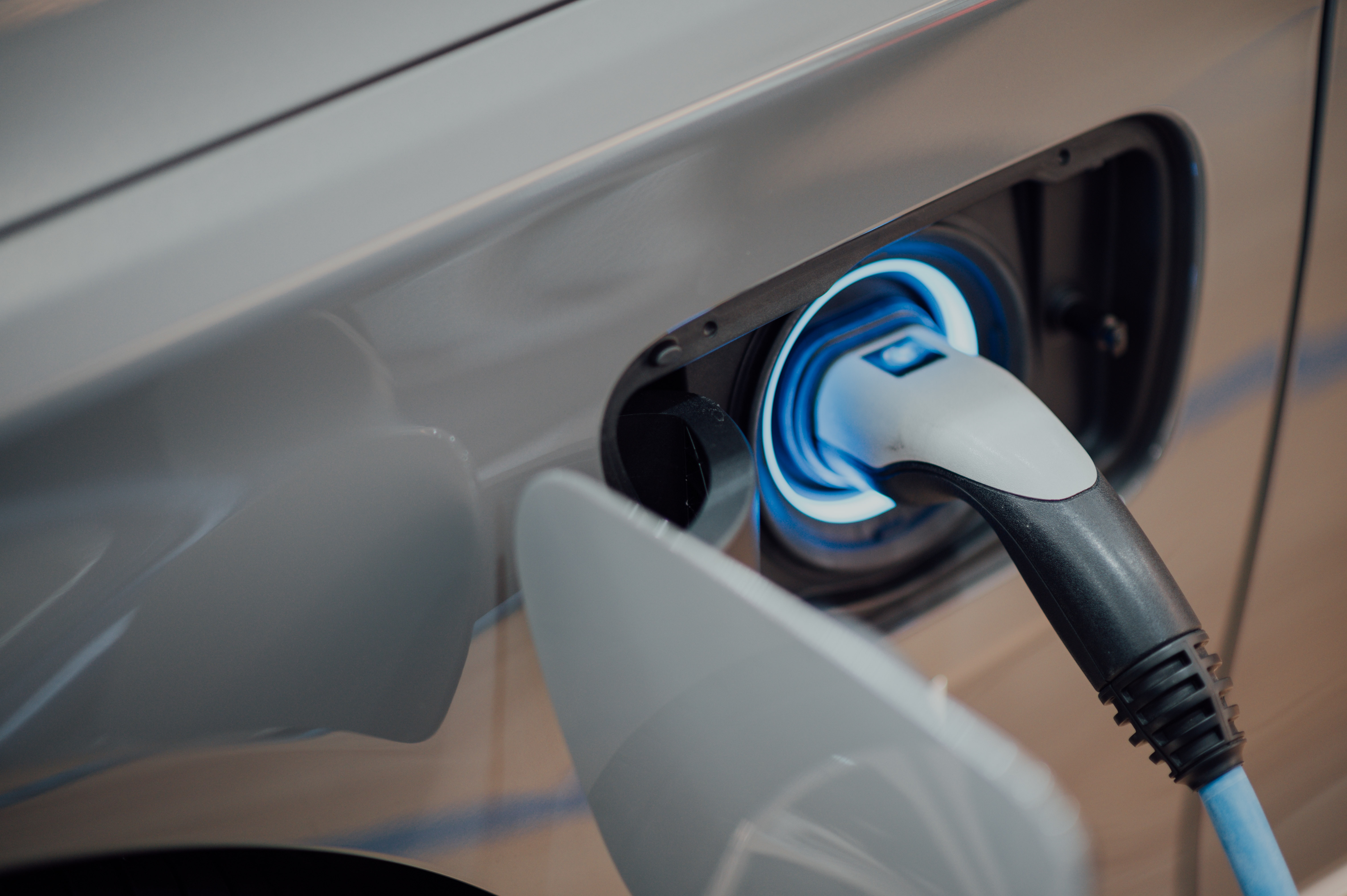
I’ve been thinking a lot about electric vehicles lately, and with that comes a whole host of related topics, from climate change, to the workers now striking the Big 3 auto companies, to every current Republican presidential candidate — each of whom say they will actively work to stop the transition to electric cars if elected.
I’ve also long been a fan of renewable energy. More than two decades ago I was writing about wind power for South Dakota’s largest daily as a college student. This was when wind wasn’t even a blip in the energy makeup of the United States (it’s now about 10% of our energy production).
Wind piqued my interest: that we could have power so simple, so clean, from a source that I love to feel on my face (whether wind or sun), versus gas, which I’ve felt on my face and cannot stress how much I do not want to try that again.
Early adopters, bless them, have been buying electric vehicles for years now, primarily driven by a single brand, Tesla, though largely for the brand and the man (he-who-shall-not-be-named) behind the brand’s cache, with environmental benefits secondary. But now the auto industry has seen the light, or rather, the darkness that is its destiny if it doesn’t get on board, and fast.
Still, I’ll admit that I’m in the “wait-and-see” category, because, like so many of us, I have range anxiety and the vehicles and infrastructure needed to support them just aren’t there yet (also, I don’t have money) — a problem that will almost certainly be in the rearview mirror within just a few years.
But my question is, what isn’t to love? Why actively campaign against it? Electric vehicles give us the freedom to choose how our automobiles are powered — by what source. And I say that knowing that statement is imperfect, and that your purchase of wind or solar power from your local utility doesn’t guarantee you that energy source, but only adds that energy to a grid mix that includes oil and coal and nuclear — but progress is often imperfect. Still, if you’ve ever complained about the price of gas, why not support bringing other options online (which itself will take some pressure off the pump, with fewer drivers needing to fill up)?
In Minnesota, by the way, you can subscribe through Xcel Energy to wind and solar power for just a few extra dollars per month, and CenterPoint Energy has renewable programs as well (your local utility almost certainly has a program, too). Given that, I was surprised to receive a newsletter recently from my city of Robbinsdale, MN, stating that fewer than 10% of residents support renewable energy through subscription programs. This, in 2023?
I don’t expect that combustion vehicles will go away anytime soon, and I don’t believe they should. Consumers should have that option. But I have no doubt which will win in the long run, and someday, probably not in my lifetime, but someday soon, seeing a gas station will be like seeing a motel sign that still advertises HBO and color TV. A quaint relic, fading into the past.
So to answer my previous question, “Why actively campaign against it?,” I think it’s pretty obvious: entrenched interests. Oil companies brought in more than $200 billion in profits in 2022 alone. 2023 has continued much the same: ExxonMobil made a profit of $11.4 billion in the first three months of 2023.
Oil companies made about the same amount of profit that autoworkers are striking over now amidst increasingly excessive executive compensation, but even the Big 3 (Ford, GM, Stellantis) made that amount of profit over the last decade — not just a single year. $200 billion in a single year.
I personally am sick of paying so much, not for oil itself, but to those whose pockets it fills. Oil, after all, came with the earth. It was here when we got here. And then some people said, “Hey, that’s mine. Here, I put it in a tube so you can pay me for it. You like tubes, right?”
I get that there are costs associated with the extraction, transportation, and manipulation of crude into its many usable forms (to say nothing of the social, political, and environmental costs). I get that. But we’ve seen the profits — the record profits — delivered to a handful at the top, the greedy billionaires of Exxon, the greenwashers of BP and Shell, the crown prince journalist killers of Saudi Arabia, the homicidal narcissists of Russia. We’ve seen what happens when oil profits concentrate in the hands of a few at the expense of the many, and aren’t we finally tired of it?
An electric vehicle revolution offers some hope, however unlikely it may be, to take some of that power back, so that we might have an actual option about how to power our vehicles and our lives, whether through gas, sun, wind, or other.
To say no to this change is to say no to having an actual choice, to say no to an increase in freedom, and to say yes to a final relinquishment of power that has been concentrated in the oil slick hands of the few for generation, after generation, after generation. Besides, we’ve all seen how There Will Be Blood ends. It ends poorly.
At least with renewable energy, it becomes even more ridiculous for the wealthy to lay claim to ownership of the blowing of the wind, or to the shining of the sun. Because isn’t it obvious that it belongs to all of us?









Leave a comment